Adv Aadvaith Chavan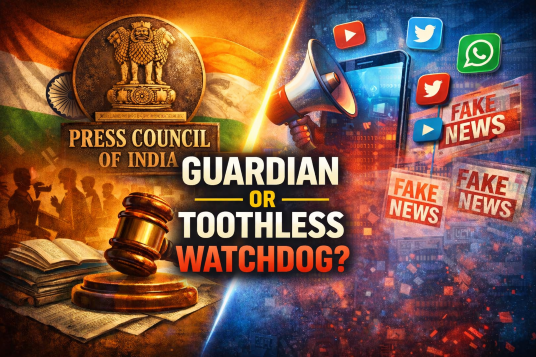
A visual representation of the declining relevance of the Press Council of India in the era of digital media and fake news challenges.
Press Council of India Exposed Is the Press Council of India Still Relevant in 2026?
The Press Council of India (PCI) was once regarded as a cornerstone institution for maintaining press freedom, media ethics, and journalistic standards in India. Established with the noble intention of safeguarding the independence of the press, PCI was meant to act as a self-regulatory authority ensuring that newspapers follow ethical guidelines while remaining free from government interference. However, in 2026, the relevance of the Press Council of India is being seriously questioned. With the explosive growth of digital media, online news portals, and social media journalism, the traditional print-centric model of regulation appears outdated. Keywords like Press Council of India relevance, media regulation India, digital journalism law India, and fake news control India are increasingly trending as debates intensify around PCI’s effectiveness. Critics argue that PCI has failed to evolve with time and has become more symbolic than functional. This article explores whether PCI is still capable of protecting press freedom or whether it has become an obsolete institution in India’s rapidly changing media landscape.Press Council of India Exposed

Historical Background: From Visionary Reform to Institutional Stagnation
The foundation of the Press Council of India lies in the recommendations of the First Press Commission of India, which was established in 1952 under the leadership of Justice G. S. Rajadhyaksha. The commission included eminent personalities like Dr. Zakir Husain and V. K. R. V. Rao, who envisioned a robust mechanism for maintaining journalistic standards in independent India. Based on these recommendations, the Press Council Act 1965 was enacted, leading to the establishment of PCI in 1966. At that time, print media was the dominant source of information, and the need for a regulatory body was both logical and necessary. Keywords such as history of Press Council of India, Press Council Act 1965 analysis, and media law India evolution highlight how PCI was initially designed to strengthen democracy. However, over the decades, while media technology and consumption patterns evolved drastically, PCI remained largely unchanged. This stagnation has led to a growing disconnect between the institution’s original vision and its current functionality, raising concerns about its ability to address modern challenges like digital misinformation and online propaganda.Press Council of India Exposed
Structure and Composition: Representation Without AccountabilityPress Council of India Exposed
The structure of PCI includes a chairman and 28 members representing journalists, editors, media owners, and Members of Parliament. The chairman is typically a retired Supreme Court judge, which is intended to ensure neutrality and legal expertise. While this composition appears balanced on paper, in practice, it has raised concerns about transparency and accountability. Keywords like Press Council composition India, media governance structure India, and PCI members controversy often appear in discussions criticizing the inclusion of individuals who lack direct experience in journalism. Allegations of political influence and favoritism in appointments further weaken the institution’s credibility. Instead of being a truly independent regulatory authority, PCI is often perceived as a semi-governmental body with limited autonomy. The lack of representation from digital media professionals is another major flaw, especially in an era where online journalism dominates. As a result, the council’s decisions often fail to reflect the realities of modern media, making its structure outdated and less effective in ensuring media accountability.
Powers and Limitations: Why PCI Lacks Enforcement Strength
Under Section 14 Press Council Act, the Press Council of India can issue warnings, reprimands, and censures against erring publications. While these powers may appear significant, they lack real enforcement capability. PCI cannot impose fines, suspend licenses, or take any punitive action that would compel compliance. Keywords such as PCI powers and limitations, media regulation loopholes India, and Press Council effectiveness highlight the core issue—lack of enforceability. In many cases, media organizations simply ignore PCI directives without facing any consequences. This has led to the perception that PCI is merely a “recommendatory body” rather than a regulatory authority. In an environment where fake news, sensationalism, and paid journalism are rampant, such limited powers are insufficient. The inability to enforce decisions undermines the very purpose of the institution, making it ineffective in maintaining journalistic integrity. Without legal authority to act decisively, PCI struggles to command respect or compliance from media organizations.
Print-Only Jurisdiction: A Major Flaw in the Digital Age
One of the most significant limitations of the Press Council of India is its jurisdiction, which is restricted solely to print media. In today’s digital-first world, where news consumption has shifted dramatically to online platforms, this limitation renders PCI largely irrelevant. Keywords like digital media regulation India, online news law India, and social media journalism India dominate current discussions on media governance. Platforms such as news websites, YouTube channels, and social media have overtaken traditional newspapers in reach and influence. Yet, PCI has no authority over these platforms. This creates a massive regulatory gap, allowing misinformation and unethical practices to flourish unchecked in the digital space. The absence of oversight for digital media not only weakens accountability but also raises concerns about national security and public trust. As media continues to evolve, the failure of PCI to expand its jurisdiction highlights its inability to adapt to contemporary challenges.
Current Crisis: Leadership Vacuum and Institutional Paralysis
The current situation of PCI reflects a deeper institutional crisis. Justice Ranjana Prakash Desai completed her tenure in December 2025, and since then, the position of chairman has remained vacant. Additionally, the 14th Press Council’s term ended in October 2024, and the 15th council has not yet been fully constituted. Keywords such as Press Council vacancy 2026, PCI inactive status India, and media regulatory crisis India highlight the seriousness of this issue. Without leadership and a functioning council, PCI is effectively non-operational. This absence of a statutory body leaves journalists without a formal mechanism for grievance redressal and protection. It also signals governmental indifference toward media regulation. The delay in reconstitution raises critical questions about the priority given to press freedom and journalistic accountability in India. In such a scenario, the already weakened PCI becomes completely ineffective, further diminishing its relevance.
Growing Criticism: Loss of Credibility and Public Trust
Over the years, PCI has faced increasing criticism from journalists, media experts, and civil society. Keywords like PCI criticism India, media accountability failure India, and fake news regulation India are frequently associated with debates on its performance. Critics argue that PCI has failed to address major issues such as paid news, biased reporting, and misinformation. The lack of timely action and weak enforcement mechanisms have eroded public trust. Additionally, allegations of political interference and the inclusion of non-journalists in key positions have further damaged its credibility. Instead of acting as an independent watchdog, PCI is often seen as a passive observer. This loss of trust is particularly concerning in a democracy where media plays a crucial role in shaping public opinion. Without a credible regulatory body, the risk of unchecked misinformation and propaganda increases significantly.
Press Council of India, PCI India, media regulation India, digital media law India, fake news control India, journalism law India, media accountability India, online news regulation India, media ethics India, press freedom India, Media Council India, PCI relevance 2026
The Need for Reform: Toward a Comprehensive Media Council
Given the limitations and challenges faced by PCI, there is a growing demand for a comprehensive “Media Council of India.” Such a body would address the shortcomings of PCI by including digital and electronic media within its jurisdiction. Keywords like Media Council India proposal, media reform India, and digital media regulation framework emphasize the urgency of this reform. A new regulatory authority should include diverse representation from journalists, legal experts, digital media professionals, and civil society. It must also have enforceable powers, such as imposing fines and ensuring compliance. Transparency in appointments and decision-making processes is essential to restore credibility. By adopting a holistic approach to media regulation, a Media Council could effectively address the challenges of the digital age while preserving press freedom.
Reform or Obsolescence? IT New Rules
The Press Council of India was once a visionary institution designed to uphold the principles of free and ethical journalism. However, in the rapidly evolving media landscape of 2026, it has become largely ineffective. Keywords such as future of media regulation India, Press Council relevance debate, and journalism accountability India capture the essence of this discussion. Without significant reforms, PCI risks becoming completely obsolete. The need of the hour is a strong, inclusive, and enforceable regulatory framework that can address both traditional and digital media. Whether through restructuring PCI or replacing it with a new Media Council, decisive action is essential. The future of Indian journalism depends on it.
Press Council of India, PCI India, media regulation India, digital media law India, fake news control India, journalism law India, media accountability India, online news regulation India, media ethics India, press freedom India, Media Council India, PCI relevance 2026