Maharashtra’s proposed Birth Date on Wedding Invitation rule sparks nationwide debate on Child Marriage, Legal Age of Marriage, Child Rights, and Women Empowerment.
Birth Date on Wedding Invitation Rule May Change Every Indian Wedding Card Forever
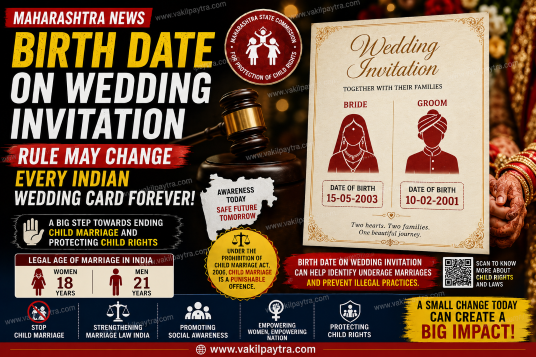
The proposed Birth Date on Wedding Invitation rule has become one of the most discussed topics in recent Maharashtra News and Marathi News debates. The Maharashtra State Commission for Protection of Child Rights has reportedly recommended that wedding invitation cards should compulsorily display the birth dates of both the bride and groom. According to supporters, this proposed Wedding Invitation Rule can help authorities and society identify illegal marriages and prevent Child Marriage before the ceremony takes place. Although the recommendation has not yet become official law, it has already generated significant discussion regarding Marriage Law India, Child Rights, Social Awareness, and Women Empowerment.

Marriage in India is not merely a legal relationship between two individuals. It is a deeply rooted social institution connected with culture, religion, customs, family honor, and community traditions. Wedding ceremonies are celebrated with emotions, rituals, and large social gatherings. However, despite modernization and strict Marriage Law India provisions, Child Marriage continues to exist in several parts of the country. The proposed Birth Date on Wedding Invitation recommendation is therefore being viewed as a preventive mechanism aimed at increasing transparency and protecting minors from illegal marriages.
Several Maharashtra News reports suggest that the recommendation intends to strengthen enforcement of the Legal Age of Marriage by making age information publicly visible on wedding cards. According to Marriage Law India, the legal age for marriage is 18 years for women and 21 years for men. If the Birth Date on Wedding Invitation becomes compulsory, relatives, neighbors, teachers, activists, and even local authorities may immediately identify whether a marriage violates legal requirements. Supporters believe this Wedding Invitation Rule may create fear of legal exposure and discourage families from conducting Child Marriage secretly.
At the same time, the recommendation has also triggered debate regarding privacy, implementation, and practicality. Critics argue that publicly printing birth dates may invade personal privacy and may not completely stop Child Marriage because false information could still be printed on invitation cards. Nevertheless, the issue has become a major topic across Marathi News channels, legal discussions, and social platforms like VakilPatra, where experts continue debating whether this proposal can genuinely improve Child Rights protection and Women Empowerment in India.
Have Something Powerful to Say?
✍️ Write for Vakilpatra — Get PublishedUnderstanding the Background of the Birth Date on Wedding Invitation Proposal
The recommendation regarding Birth Date on Wedding Invitation was reportedly made by the Maharashtra State Commission for Protection of Child Rights after growing concern about Child Marriage cases in several regions of the state. Child rights organizations have repeatedly highlighted that despite strict Marriage Law India provisions, illegal marriages involving minors continue to occur, especially in rural and economically weaker communities.
The proposed Wedding Invitation Rule aims to create social accountability. Wedding cards are distributed among relatives, neighbors, political leaders, teachers, religious authorities, and local community members. If birth dates are clearly mentioned, society itself may become more alert regarding violations of the Legal Age of Marriage. This public visibility may increase Social Awareness and encourage people to report suspicious marriages before they take place.
Supporters of the Birth Date on Wedding Invitation proposal believe that transparency itself can act as a preventive tool. Many Child Marriage cases happen secretly because society lacks access to age verification. Publicly displaying birth dates may therefore help Child Rights activists, NGOs, schools, and local authorities identify illegal marriages more easily.
Although the recommendation is not yet law, it has already become a trending Maharashtra News issue. Marathi News discussions and VakilPatra legal platforms have extensively debated whether such reforms can improve enforcement under Marriage Law India while also strengthening Women Empowerment and child protection mechanisms.
Child Marriage Still Remains a Serious Social Problem
Despite technological progress and urban development, Child Marriage remains a serious issue in India. Several Maharashtra News investigations and Marathi News reports continue to expose cases where underage marriages are conducted secretly during festivals, mass marriage ceremonies, or community events. The proposed Birth Date on Wedding Invitation recommendation has therefore gained importance because authorities believe it may help identify such illegal marriages at an early stage.
Child Marriage is not simply a legal violation under Marriage Law India. It is also a major human rights issue affecting education, health, emotional development, economic independence, and Women Empowerment. When children are forced into marriage, they lose the opportunity to complete education, build careers, and make independent life decisions. Young girls suffer the most severe consequences because they are often expected to leave school and immediately assume domestic responsibilities.
Experts speaking on VakilPatra and Marathi News debates argue that Child Marriage continues because of poverty, social customs, patriarchal thinking, illiteracy, and weak implementation of Marriage Law India. Therefore, the proposed Birth Date on Wedding Invitation rule is being viewed not only as a legal reform but also as a Social Awareness initiative aimed at protecting Child Rights.
Poverty and Financial Pressure as Causes of Child Marriage
Poverty remains one of the strongest causes behind Child Marriage in India. In economically weaker families, daughters are often viewed as financial responsibilities rather than equal members of society. Parents struggling with low income sometimes believe that marrying daughters early reduces the burden of education expenses, food costs, clothing expenses, and future dowry pressure.
Several Maharashtra News reports have shown that poor families often arrange marriages for daughters at a young age due to fear of increasing social pressure and economic insecurity. The proposed Birth Date on Wedding Invitation rule may discourage such illegal practices because publicly visible age information could expose violations of the Legal Age of Marriage.
Experts discussing the issue on VakilPatra and Marathi News platforms have repeatedly emphasized that Child Marriage cannot be eliminated through punishment alone. Strong Social Awareness campaigns and Women Empowerment initiatives are necessary to help families understand the long-term benefits of girls’ education and financial independence.
Under Marriage Law India, poverty is not a legal excuse for conducting Child Marriage. The Prohibition of Child Marriage Act, 2006 clearly prohibits marriages involving minors. However, weak enforcement and social customs often make implementation difficult in rural regions.
Lack of Education and Social Awareness
Lack of education remains another major factor responsible for Child Marriage. Many families are unaware of the Legal Age of Marriage and the legal consequences associated with violating Marriage Law India. In several rural communities, people still believe early marriage protects family honor and social reputation.
The proposed Birth Date on Wedding Invitation recommendation may help increase Social Awareness regarding legal marriage age requirements. If birth dates become compulsory on wedding cards, people may become more conscious about Child Rights and legal obligations before arranging marriages.
Education directly influences decision-making. Families that prioritize higher education and career opportunities are generally less likely to support Child Marriage. On the other hand, illiteracy often strengthens harmful traditions and patriarchal practices.
Several Marathi News debates and VakilPatra legal discussions have highlighted that awareness campaigns in schools, colleges, Gram Panchayats, and villages are essential for reducing Child Marriage. Social Awareness programs must explain not only the legal aspects of Marriage Law India but also the health risks and psychological consequences associated with underage marriage.
Gender Inequality and Women Empowerment
The issue of Child Marriage is deeply connected with gender inequality. In many conservative communities, boys are encouraged to pursue education and employment while girls are expected to marry early and focus on domestic responsibilities. This patriarchal mindset weakens Women Empowerment and limits opportunities for girls.
The proposed Birth Date on Wedding Invitation rule has also become part of the broader Women Empowerment debate in Maharashtra News discussions. Activists argue that preventing Child Marriage is essential for ensuring that girls receive equal educational and professional opportunities.
Women Empowerment is not only a social issue but also a constitutional principle. Marriage Law India and constitutional protections guarantee equality, dignity, and freedom for women. However, Child Marriage often destroys these rights by forcing young girls into dependency and limiting their future choices.
Experts on VakilPatra and Marathi News platforms argue that stronger Social Awareness regarding gender equality is necessary for meaningful reform. Unless society changes its mindset toward women and girls, legal reforms alone may not completely eliminate Child Marriage.
Health Risks and Psychological Consequences Birth Date on Wedding Invitation
One of the most serious consequences of Child Marriage is its impact on physical and mental health. Young girls are physically unprepared for pregnancy and motherhood. Medical experts repeatedly warn that teenage pregnancies increase the risk of maternal mortality, anemia, malnutrition, childbirth complications, and reproductive health disorders.
The proposed Birth Date on Wedding Invitation rule is therefore being supported by several healthcare activists who believe that preventing underage marriages can directly improve women’s health and Child Rights protection.
Apart from physical health risks, Child Marriage also creates severe emotional and psychological pressure. Teenagers suddenly face marital responsibilities, family expectations, pregnancy, and domestic obligations before they are mentally prepared. This often results in depression, anxiety, emotional trauma, and psychological instability.
Several Maharashtra News and Marathi News reports have highlighted cases where young brides faced domestic violence and emotional abuse after Child Marriage. Experts on VakilPatra legal discussions argue that increasing Social Awareness regarding mental health and Women Empowerment is equally important alongside enforcing Marriage Law India.
Current Marriage Law India Provisions Against Child Marriage
India already has strict legal provisions regarding Child Marriage. Under the Prohibition of Child Marriage Act, 2006, the Legal Age of Marriage is fixed at 18 years for women and 21 years for men. Any marriage involving minors may lead to legal consequences for parents, organizers, priests, and facilitators.
The proposed Birth Date on Wedding Invitation recommendation is now being discussed as an additional preventive mechanism under Marriage Law India. Supporters believe that public visibility of age details may strengthen legal enforcement and improve Child Rights protection.
Marriage Law India also provides for Child Marriage Prohibition Officers responsible for:
- Preventing illegal marriages,
- Conducting awareness campaigns,
- Collecting evidence,
- Assisting victims.
However, Maharashtra News reports frequently highlight implementation challenges. Many Child Marriage cases occur secretly in villages where authorities receive little information or face social resistance.
Can the Birth Date on Wedding Invitation Rule Really Help?

The biggest question remains whether the proposed Birth Date on Wedding Invitation rule can genuinely reduce Child Marriage in India. Supporters believe that transparency and public accountability may discourage illegal marriages. If birth dates are openly visible, society itself may become more active in reporting violations of the Legal Age of Marriage.
The proposal may also improve Social Awareness regarding Child Rights and Marriage Law India. Public discussions on Marathi News channels and VakilPatra platforms have already educated many people regarding legal marriage age requirements.
Vakilpatra’s Conclusion on Birth Date on Wedding Invitation
However, critics argue that families determined to conduct Child Marriage may simply print fake birth dates. Others believe the Wedding Invitation Rule could create privacy concerns because birth dates are personal information.
Despite these criticisms, many experts believe the recommendation has value as an awareness mechanism. Even if it does not completely eliminate Child Marriage, the Birth Date on Wedding Invitation proposal may still contribute to greater transparency, Women Empowerment, and stronger Child Rights discussions.
The proposed Birth Date on Wedding Invitation rule has become one of the most debated Maharashtra News and Marathi News topics in recent times. The recommendation reflects increasing concern regarding Child Marriage, Child Rights, Women Empowerment, and enforcement of Marriage Law India.
Although the Wedding Invitation Rule has not yet become law, it has already succeeded in increasing Social Awareness regarding the Legal Age of Marriage and illegal child marriages. Supporters believe the proposal may discourage underage marriages through public accountability, while critics continue raising concerns regarding privacy and implementation.
Ultimately, eliminating Child Marriage requires much more than legal reform alone. Strong enforcement of Marriage Law India, educational opportunities, Women Empowerment initiatives, financial support for poor families, and long-term Social Awareness campaigns are equally necessary.
The debate surrounding the Birth Date on Wedding Invitation proposal may therefore become an important milestone in India’s ongoing effort to protect Child Rights and create a safer, more equal, and more progressive society.